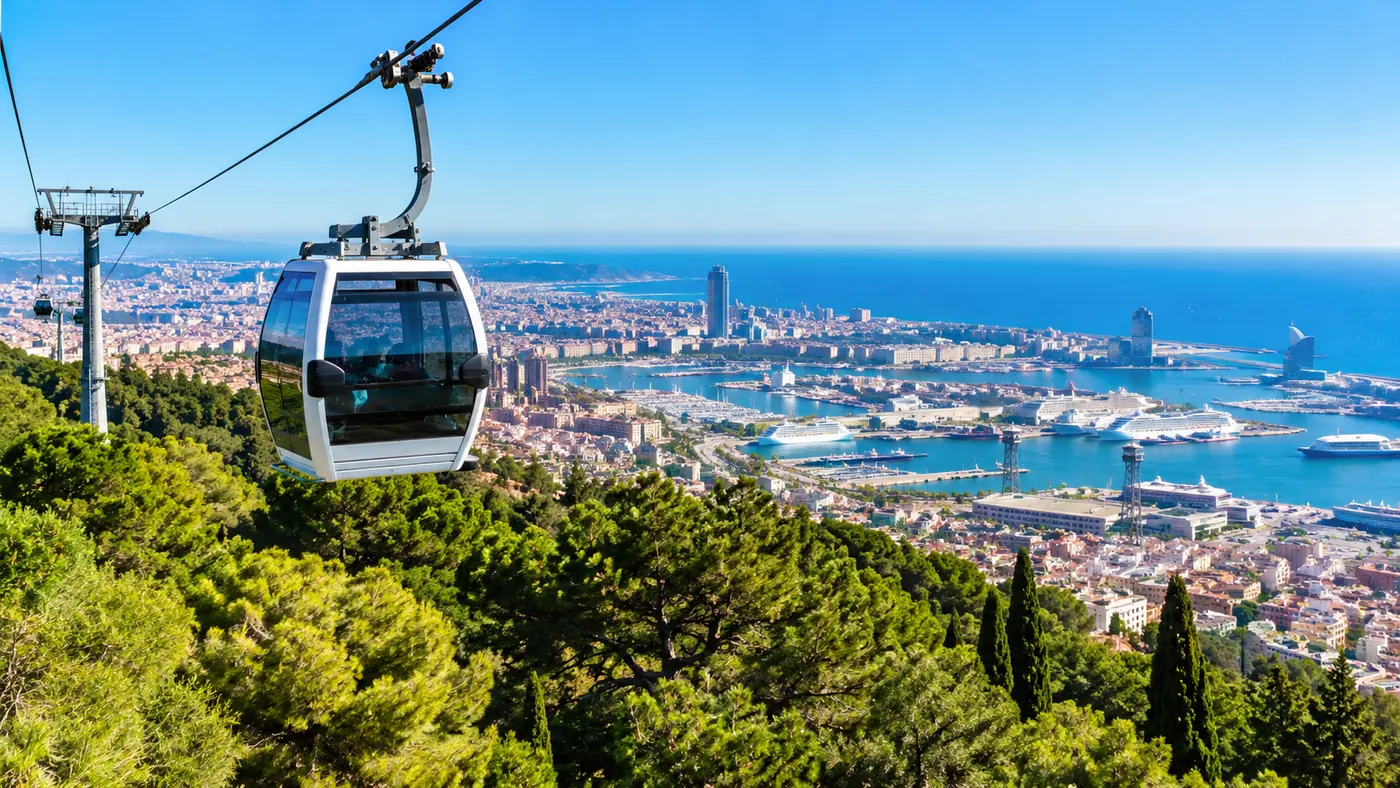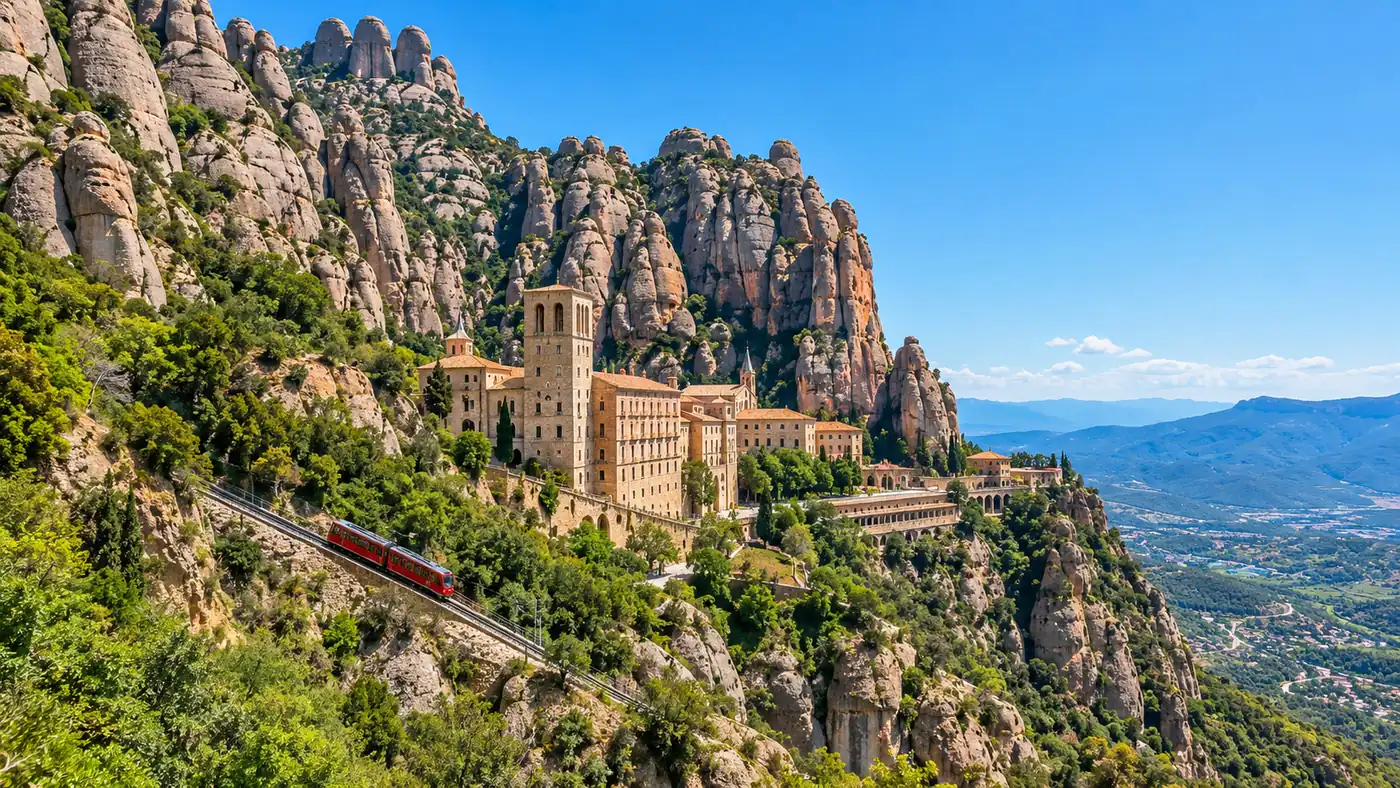
Booking choice: The Old Town walk with castle and cable car, ★ 4.7 (1,085). Check dates Compare the options below
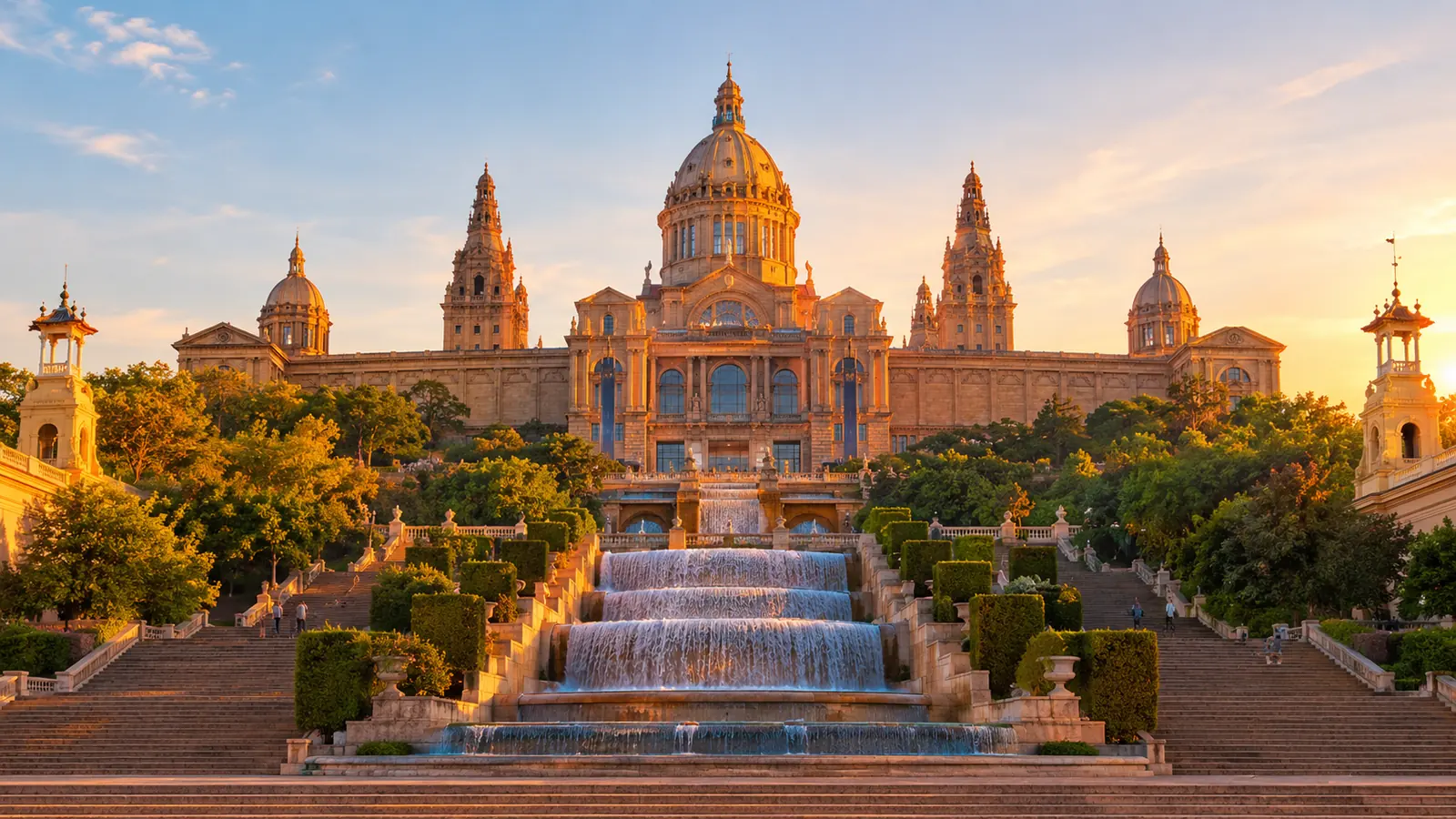
Montjuïc takes its name, the Jewish mountain, from a medieval Jewish cemetery on its slopes. Two great events shaped the rest: the 1929 International Exhibition, which left the Palau Nacional, the Magic Fountain and Poble Espanyol, and the 1992 Olympic Games, which rebuilt the stadium and added the Olympic Ring.
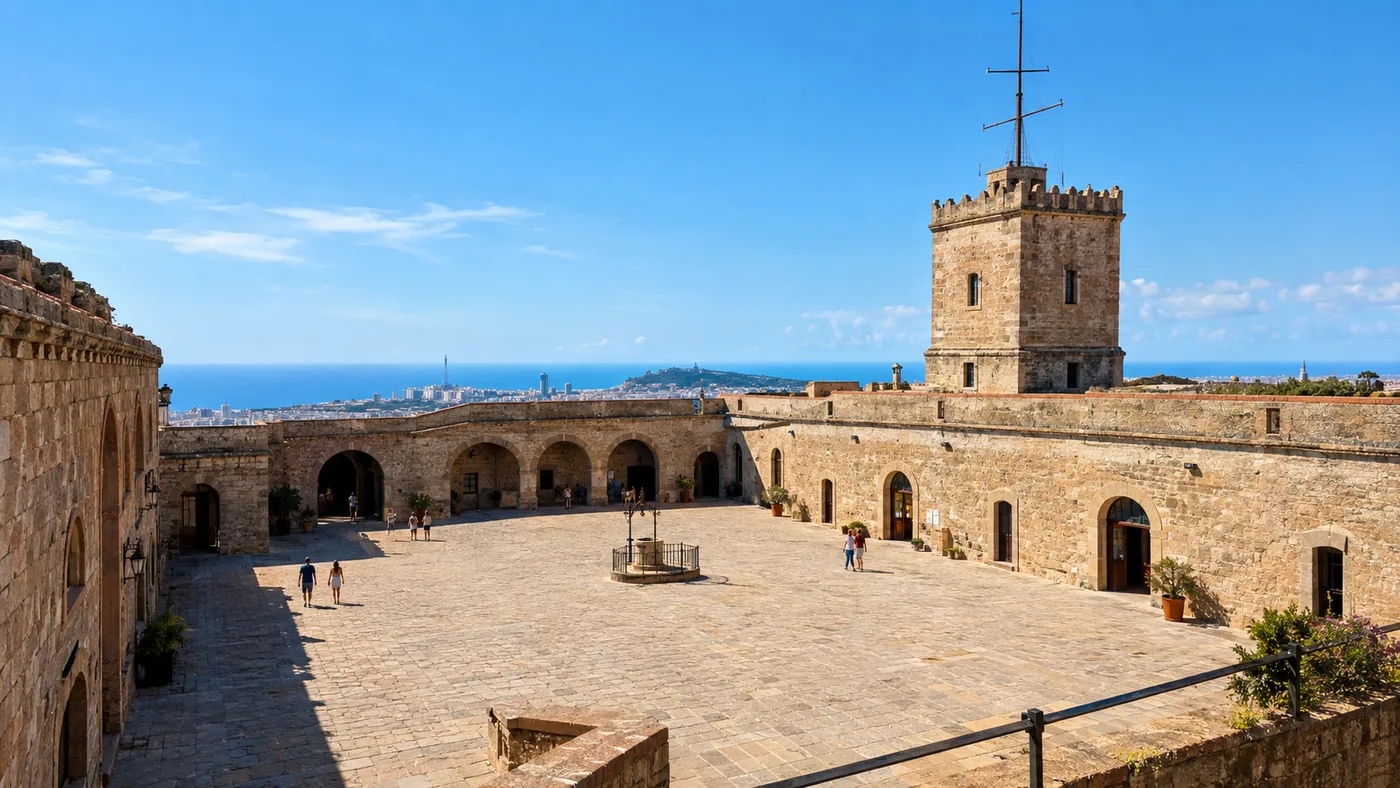
This guide lists every main sight with what it is and how long it takes, suggests a one-day route and flags the Monday closures. The fortress at the top has its own page, the Montjuïc Castle guide, and the ride up is explained in the Montjuïc cable car guide.
The quick answer
Top sights: the castle, MNAC and its rooftop terraces, the Fundació Joan Miró, Poble Espanyol, CaixaForum, the Mies van der Rohe Pavilion, the Magic Fountain and the Olympic Ring. Gardens: Mossèn Costa i Llobera (cactus), Laribal, Joan Brossa, the Jardí Botànic and the Mirador de l'Alcalde; most gardens are open to everyone. Best route: ride up by funicular and cable car, walk down to Plaça d'Espanya. Time: a half day for the castle and the walk down; a full day with one or two museums. Mondays: MNAC, the Fundació Miró and the Olympic Museum close; the castle, the cable car and Poble Espanyol open every day. Evening: the Magic Fountain on selected evenings, most nights of the week in summer, a few evenings a week in autumn and winter. Football: Barça plays at Camp Nou in 2026/27. Cancellation: full refund if you cancel up to 24 hours ahead on every tour listed here.
What are the main attractions in Montjuïc?
The castle, the MNAC art museum, the Fundació Joan Miró, Poble Espanyol, the Olympic Ring, the Magic Fountain and the gardens and viewpoints. CaixaForum and the Mies van der Rohe Pavilion stand at the foot of the hill, by Plaça d'Espanya.
The sights are spread across the whole hill, from the fortress at the top to the exhibition halls at the bottom, so it helps to know what each one is and how long it takes. The table gives one line for each, with the time most visitors spend there.
| Sight | What it is | Time | Good to know |
|---|---|---|---|
| Castell de Montjuïc | The fortress at the top, with a new history exhibition and views of the port | About 1.5 hours | Open every day; dungeons on guided visits only |
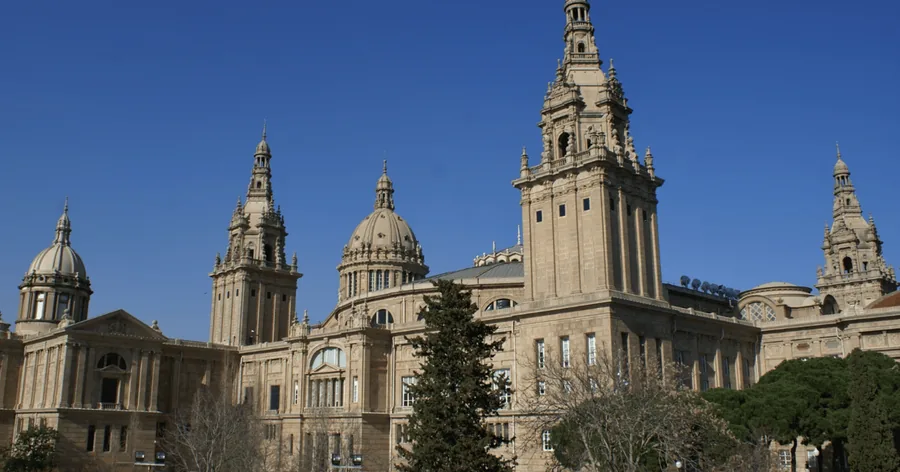
| MNAC | Catalan art from the Romanesque murals onwards, in the Palau Nacional, with rooftop terraces | About 2 hours | Closed on Mondays except holidays |
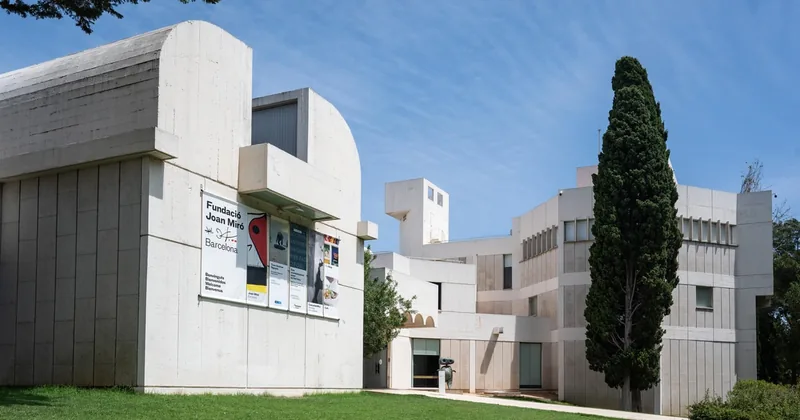
| Fundació Joan Miró | The fullest collection of Miró, in a white building by Josep Lluís Sert | About 1.5 hours | Closed on Mondays except holidays |
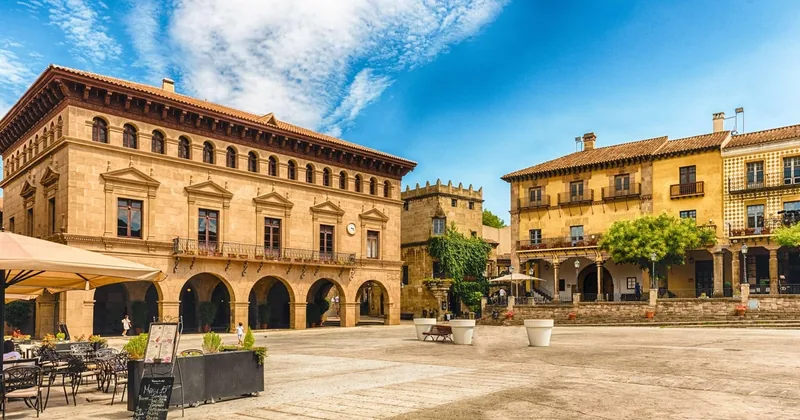
| Poble Espanyol | An open-air village of 117 replicas of buildings from across Spain, built for 1929 | About 2 hours | Open every day; craft workshops and a children's area |
| CaixaForum | An arts centre in the Casaramona, a modernista factory by Puig i Cadafalch | About 1 hour | Open every day |
| Mies van der Rohe Pavilion | The German pavilion of the 1929 exhibition, rebuilt in 1986 | About 30 minutes | Open every day; can close for events |
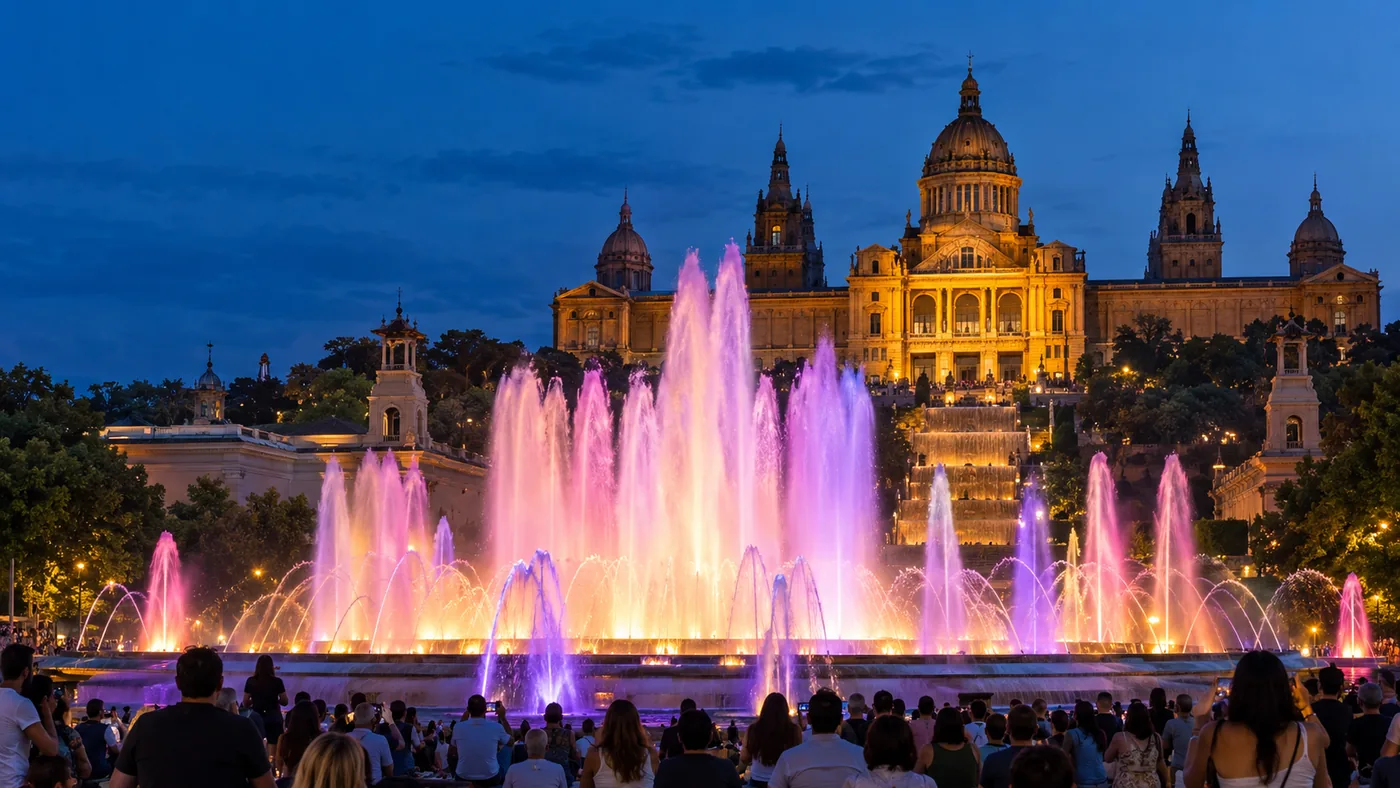
| Magic Fountain | The 1929 fountain by Carles Buïgas, with shows of light and music | About 1 hour | Selected evenings only; there is no ticket |
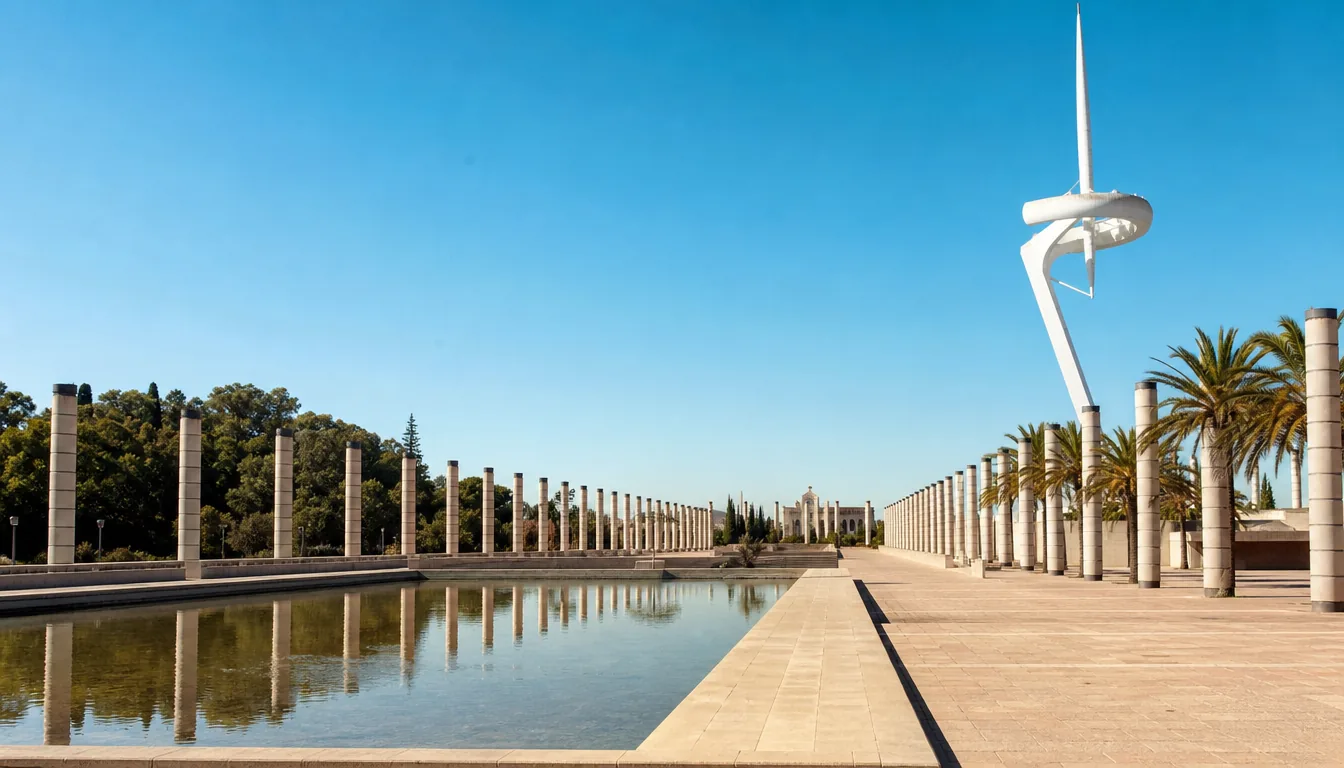
| Olympic Ring | The stadium, the Palau Sant Jordi, the Calatrava tower and the Olympic Museum | About 1 hour | The museum closes on Mondays |
| Gardens and Mirador de l'Alcalde | The cactus garden, terraced gardens, the Jardí Botànic and the port viewpoint | 1 to 2 hours | Most gardens are open to everyone |
| MUHBA Refugi 307 | A Civil War air-raid shelter in Poble-sec, at the foot of the hill | One guided visit | Guided visits only; book ahead |
What are some things to do and see at Montjuïc?
Ride the cable car, walk the castle ramparts, look at Romanesque murals in MNAC, wander the gardens, stand where the 1992 Olympics happened and watch the Magic Fountain after dark. Many of the best moments are outdoors.
The steps and terraces in front of the Palau Nacional, the gardens, the Olympic Ring esplanade and the Mirador de l'Alcalde are public spaces open to everyone. There is no ticket for the fountain; you simply walk up and watch. Its shows run on selected evenings: most nights of the week in summer and a few evenings a week in autumn and winter, in October from Thursday to Saturday, 21:00 to 22:00. The Magic Fountain guide has the details.
Families often head for Poble Espanyol, with craft workshops for glass, leather and ceramics, audiovisual shows and a children's area with giant slides; at 4.1 from 3,792 reviews it has the lowest rating of the main products on this site. Art lovers choose the Fundació Joan Miró (4.6 from 1,569 reviews), whose ticket includes the temporary exhibitions. For a slower walk, the gardens walk with a glass of wine (4.9 from 22 reviews) goes up by funicular to the Joan Brossa gardens and the Mirador de l'Alcalde, explains the castle from outside and passes the Teatre Grec.
The fullest collection of work by Joan Miró, temporary exhibitions included, in a white building among the pines of the park.
Check dates for the Fundació Miró ticketHow do you see Montjuïc in one day?
Ride up, walk down. Take the funicular from Paral·lel and the cable car to the castle in the morning, then walk downhill past the viewpoints, the gardens, the Miró museum and the Olympic Ring to MNAC, and end at the Magic Fountain on a show evening.
- Morning: metro L2 or L3 to Paral·lel, the funicular to Parc de Montjuïc and the cable car to the castle. Visit the castle while it is cool and quiet, for about an hour and a half.
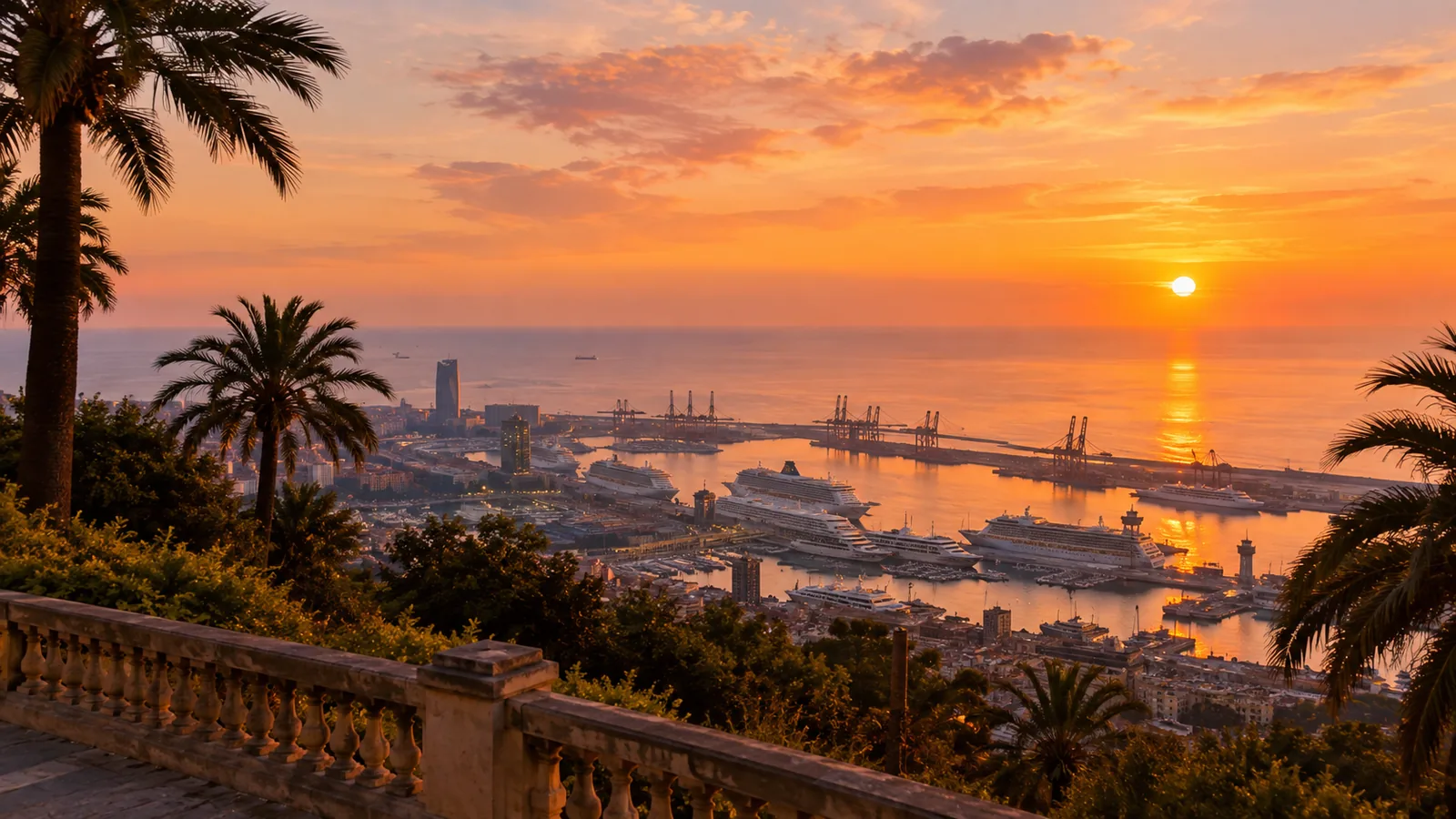
- Late morning: ride the cable car down and hop off at the Mirador stop for the port view. If you have time, the cactus garden of Mossèn Costa i Llobera lies lower down on the sea-facing slope.
- Early afternoon: the Fundació Joan Miró, then the terraced Jardins de Laribal.
- Afternoon: the Olympic Ring and the stadium, then MNAC and its rooftop terraces.
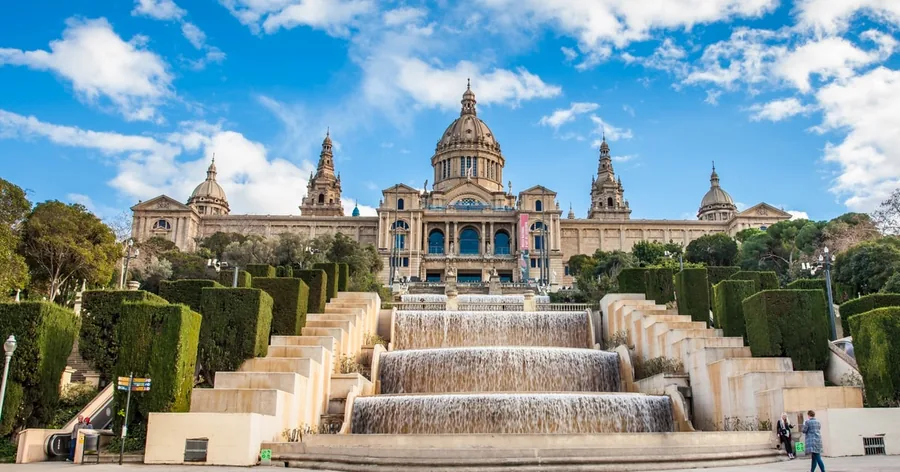
- Golden hour: the steps in front of the Palau Nacional, looking down over Plaça d'Espanya.
- After dark: the Magic Fountain on show evenings, then the metro home from Plaça d'Espanya.
The walk down is easy, with outdoor escalators alongside parts of the steps below the Palau Nacional. On a Monday, swap the museums for Poble Espanyol or CaixaForum.
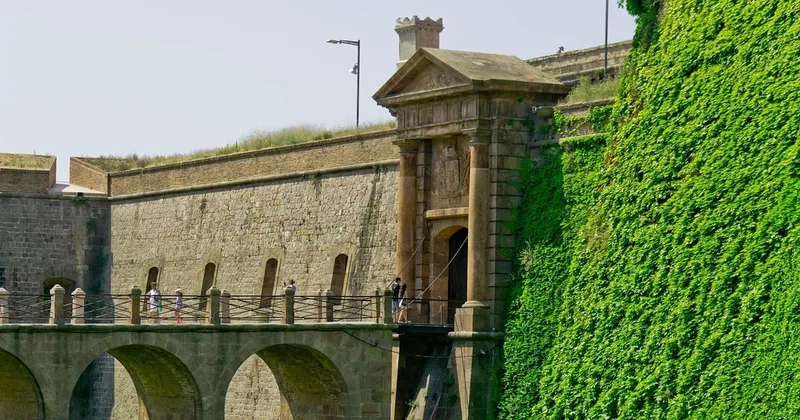
The easy way to the top with a guide: an Old Town walk from La Rambla, the funicular and return cable car, and a visit of the castle with its watchtower views, in groups of up to 15. Rated 4.7 from 1,085 reviews.
Explore the Old Town walk with castle and cable carWhat is open on Mondays in Montjuïc?
Several Montjuïc museums close on Mondays: MNAC, the Fundació Miró and the Olympic Museum. The castle, the cable car and Poble Espanyol open every day.
On a Monday, build the day around the castle, the cable car, the gardens and Poble Espanyol. CaixaForum and the Mies van der Rohe Pavilion open daily too. MNAC and the Fundació Miró do open on some public holiday Mondays, so check their websites if your Monday is a holiday.
MNAC also has set admission days on certain weekends; check the museum's website before you book. The Fundació Miró lists its opening days on its official site.
Open every day, Mondays included: 117 full-size buildings from across Spain, craft workshops, an art collection and views over the city.
Check dates for the Poble Espanyol ticketIs Montjuïc worth visiting on a short trip to Barcelona?
Yes, if you like views, art or green space. In half a day you can ride to the castle and walk down through the gardens to the Palau Nacional; with a full day you can add one or two museums.
Montjuïc is close: from the city centre it takes roughly 15 minutes by metro and funicular. It suits many kinds of visitors: art lovers for MNAC and Miró, families for Poble Espanyol and the cable car, sports fans for the Olympic Ring, and anyone who wants a quieter half day above the busy streets. It suits a visit of only an hour or two less well, because the sights are spread out across the hill.
Montjuïc is a relaxed, family-friendly park. As anywhere busy in Barcelona, keep valuables in a front pocket, especially in the fountain crowds. If you are weighing it against a day trip out of the city, Montjuïc or Montserrat compares the two.
What is happening at the Olympic Stadium in 2026?
Concerts and events, but no Barça games. FC Barcelona played at the Olympic Stadium from 2023 until November 2025 and is back at Camp Nou for the 2026/27 season. The club plans to return to Montjuïc for part of 2027/28.
The Estadi Olímpic Lluís Companys was built for 1929 and rebuilt for the 1992 Games. Around it, the Olympic Ring esplanade is open to everyone, with the Palau Sant Jordi arena by Arata Isozaki, the white communications tower by Santiago Calatrava and the Olympic and Sports Museum, where you can see the handprints of famous athletes outside.
The Olympic and Sports Museum is closed on Mondays. If you come for a concert at the Palau Sant Jordi or the stadium, expect busy metro and bus services after the show.
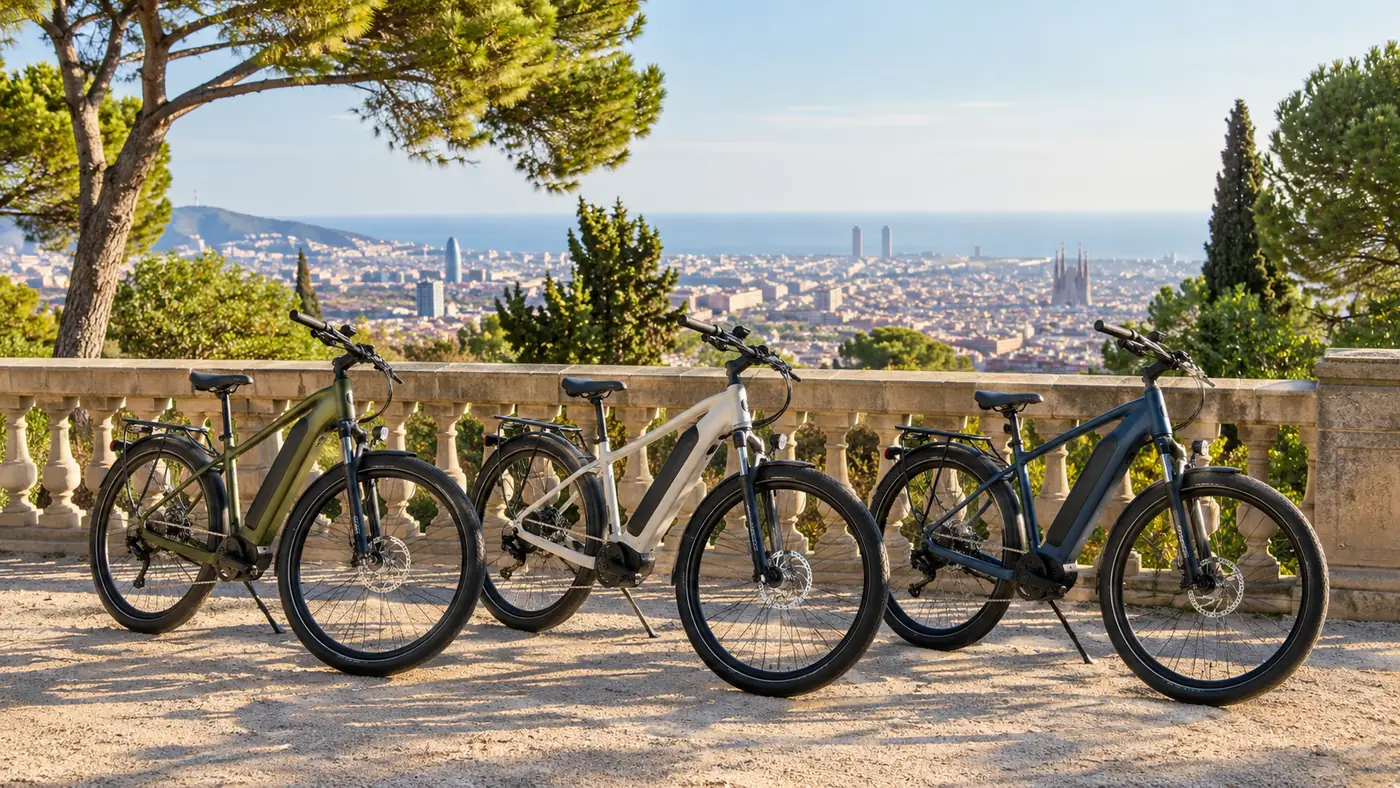
A small-group e-bike ride from the Arc de Triomf to Plaça d'Espanya, the Olympic Stadium, the Palau Nacional and the castle viewpoints, with the motor doing the hill.
Check dates for the e-bike tour to the castleWhich gardens and viewpoints should you see on Montjuïc?
The Mirador de l'Alcalde for the port view, the cactus garden of Mossèn Costa i Llobera, the terraced Jardins de Laribal and the Jardí Botànic. Most gardens are open to everyone in the daytime.
The Mirador de l'Alcalde, opened in 1969, has a large mosaic and garden by Joan Josep Tharrats and a sweeping view of the port, the sea and the beaches; the cable car stops there on the way down. Below it, on the sea-facing slope near Miramar, the Jardins de Mossèn Costa i Llobera hold more than 800 species of cactus. The Jardins de Laribal climb in terraces and stairways near the Fundació Miró, the Jardins de Joan Brossa near the cable car base fill the site of a former amusement park, and the Jardí Botànic is the city's botanical garden.
A guide helps the hill make sense. The private Montjuïc walk (4.8 from only 16 reviews) starts by the Magic Fountain and covers the outside of MNAC, the Olympic Ring, the castle walls and the Mirador de l'Alcalde in 2 hours; transport and entries are not included, and the cable car is paid on the day for you and the guide.
How do you get around Montjuïc?
On foot downhill, with the funicular, the cable car and bus 150 for the climbs. Hop-on hop-off buses and e-bike tours are other ways to cover the distances.
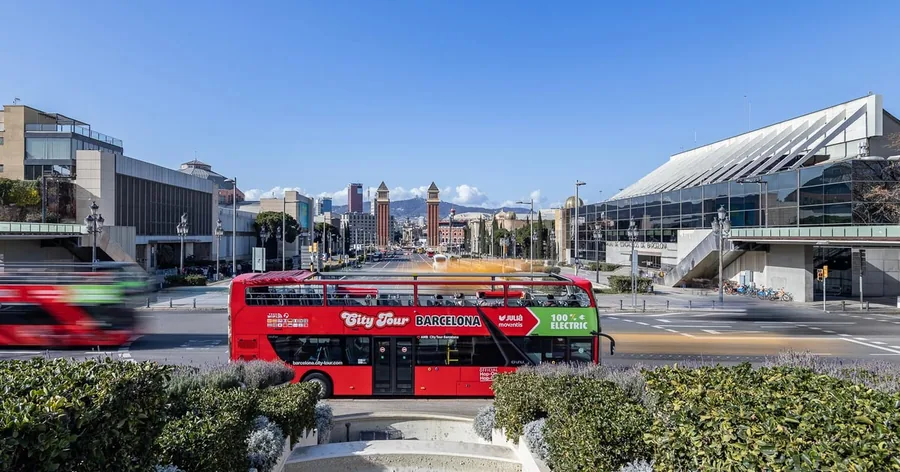
Bus 150 runs from Plaça d'Espanya up to the castle and stops near CaixaForum, the Mies van der Rohe Pavilion, Poble Espanyol, the Olympic Museum and the Fundació Miró, on a regular bus fare. The hop-on hop-off bus tour (4.4 from 24,598 reviews) stops at Plaça d'Espanya, by MNAC and on the hill, but the cable car is not included. The e-bike tour to the castle and viewpoints (4.7 from 460 reviews) lets the motor do the climbs and sees the castle from outside.
For a side of the hill most visitors miss, book a guided visit to MUHBA Refugi 307 in Poble-sec, an air-raid shelter dug by residents during the Civil War; visits are by guided tour only. Every tour format side by side is in Montjuïc tours compared.
Frequently asked questions
How much time do you need for Montjuïc?
Half a day for the castle and a walk down through the gardens; a full day if you add one or two museums and the Magic Fountain.
Which Montjuïc museums close on Mondays?
MNAC, the Fundació Joan Miró and the Olympic and Sports Museum. The castle, the cable car, CaixaForum and Poble Espanyol open every day.
Can you walk up Montjuïc?
Yes, but the climb from Plaça d'Espanya or Poble-sec is long and steep in parts. Ride up by funicular and cable car or bus 150, and walk down.
Does FC Barcelona play at Montjuïc in 2026?
No. Barça is back at Camp Nou for the 2026/27 season and plans to return to Montjuïc for part of 2027/28.
Ready to book
Choose your tour
Check your date and the live price on GetYourGuide; the refund terms are shown on each option.
Old Town Walk, Montjuïc Castle and Cable Car
- A professional guide, groups of up to 15
- Walk past La Boqueria, the Liceu and Palau Güell
- Funicular ride from Paral·lel to Parc de Montjuïc
Fundació Joan Miró Entry Ticket
The fullest collection of Miró's work, in Josep Lluís Sert's white building in the park; closed on Mondays
Poble Espanyol Entry Ticket
The 1929 open-air village of Spanish architecture, with craft workshops, an art collection and city views